
Reprinted from: Zhejiang News | 2018-01-19

On January 18th, the Zhejiang Provincial Department of Justice and the Zhejiang Drug Rehabilitation Administration organized a series of publicity activities for the public to enter the judicial administration “Zhijiang Fa Sheng” and held the first event of 2018-“Scientific Drug Rehabilitation” special session. Nearly 20 media outlets, representatives of some member units of the Provincial Drug Control Commission, members of the Provincial Scientific Drug rehabilitation Expert Advisory Committee, provincial drug rehabilitation public welfare ambassadors, the most beautiful anti-drug people, outstanding community anti-drug social workers, community anti-drug volunteer representatives, etc. More than 100 people from all walks of life were invited to walk into the compulsory isolation drug rehabilitation center in Gongchen, Zhejiang Province, zero-distance contact with drug rehabilitation in our province“Black technology”. The launching ceremony of the pilot project for the comprehensive standardization of national social management of the “Fourth, Fourth and Fifth Five-year” Drug rehabilitation model was also held at the scene.
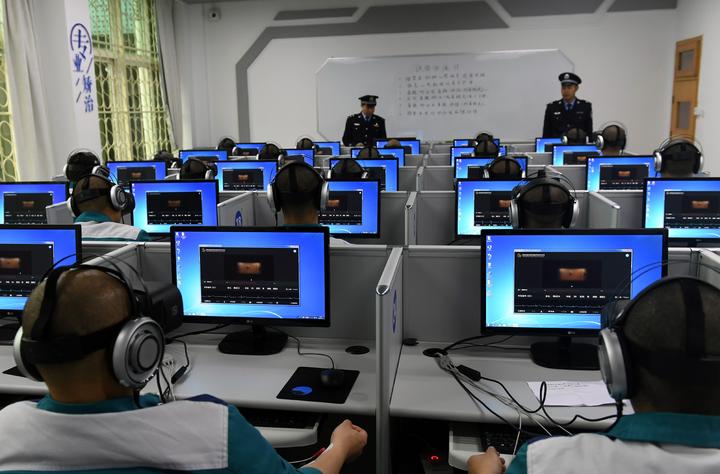

“I have experienced some of the consequences of drug abuse firsthand. It brought me back to that scene. I really don't want to touch drugs anymore. "Taking off the equipment, Zhang, a drug rehabilitation officer, sincerely told the visitors. What he said about "it” is a “black technology” for drug rehabilitation in our province-the use of VR virtual reality for drug rehabilitation treatment. It can broadcast different audio and video content for drug rehabilitation personnel with different degrees of drug addiction, so that drug rehabilitation personnel can feel the harm of drug abuse firsthand, thereby alleviating the desire for drugs. “It's amazing! High-tech is used in detoxification. ”The visitor said sincerely.

“The instrument vibrates on my scalp, and it feels numb, it doesn't hurt or itch. ”The instrument mentioned by Wang Mou, a drug rehabilitation officer, is an innovation in medical drug rehabilitation in our province-a repetitive transcranial magnetic stimulation project. How powerful is it? Wang Mou, a drug rehabilitation officer, said in person: He received this treatment 5 times, his sleep was extended from 3-4 hours to 8 hours a day, and his spirit and appetite improved a lot.
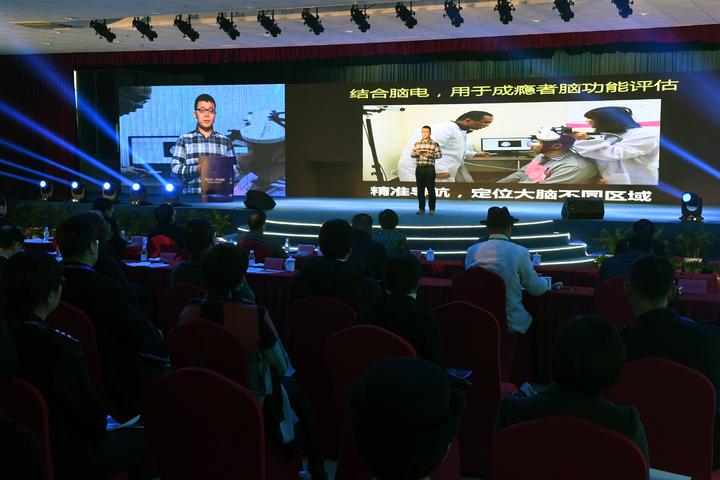
“I don't know if I don't come, it turns out that the detoxification method in our province is so advanced! "The visitors said with emotion. After watching the Zhejiang Drug rehabilitation exhibition board matrix and listening to the introduction of project experts, they had a certain understanding of Zhejiang's characteristic “Fourth, Fourth and Fifth Five-year” drug rehabilitation model and the latest achievements of practical innovation, and therefore refreshed their understanding of Zhejiang's drug rehabilitation work.

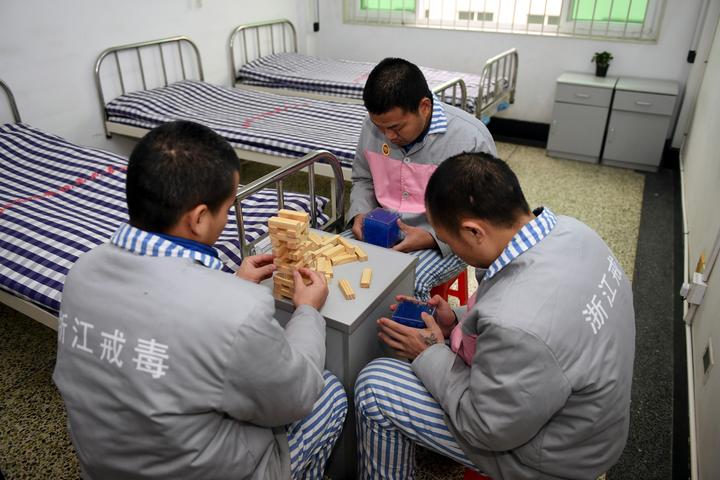

It is understood that the “fourth, Fourth and Fifth Five-year" drug rehabilitation model has covered 11 compulsory isolation drug rehabilitation centers across the province. This model is based on the separation of four districts (physiological detoxification zone, education adaptation zone, rehabilitation consolidation zone, and return guidance zone), and features four types of management (ward-style management, barracks-style management, campus-style management, and community-style management), supported by five major professional centers, andThe diagnostic evaluation is total traction. In 2017, the Zhejiang Provincial Drug Rehabilitation Administration launched the ”Year of Scientific Drug Rehabilitation Action", organized a "Hundred Experts' trip", and introduced 11 scientific research projects on drug rehabilitation. In addition to ”black technology“, our province is also constantly innovating in many aspects, and strives to provide ”Zhejiang wisdom" for the national drug rehabilitation work. For example, in terms of physical rehabilitation, exercise-based prescriptions are used to enhance the physical fitness of drug rehabilitation personnel to resist drugs and fight drugs; in terms of awareness, behavioral avoidance training projects are carried out.
 English
  Chinese